Tips for a Beginner Completing Jigsaw Puzzles
Transform puzzle frustration into puzzle satisfaction with these proven strategies!
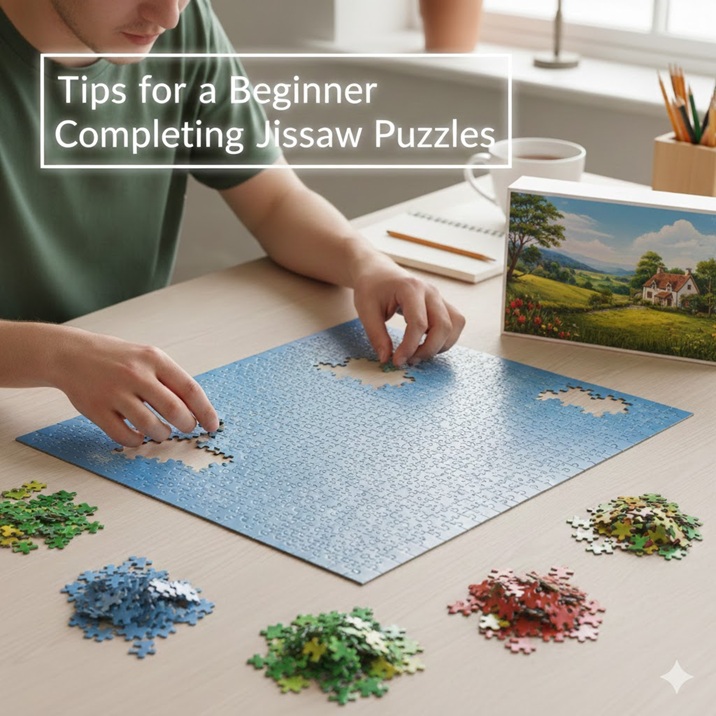
Jigsaw puzzles have been a beloved pastime for generations, offering a perfect blend of relaxation and mental stimulation. However, for beginners, staring at hundreds or even thousands of scattered pieces can feel overwhelming. The good news is that with the right approach, anyone can successfully complete a jigsaw puzzle and discover the immense satisfaction that comes with placing that final piece. Here are essential tips that will set you on the path to puzzle-solving success.
1. Choose the Right Puzzle for Your Skill Level
As a beginner, selecting an appropriate puzzle is crucial for maintaining motivation and building confidence. Start with puzzles containing 300 to 500 pieces—these offer enough challenge to be engaging without being discouraging. Look for images with distinct colors, clear patterns, and recognizable objects. Landscapes with gradients of blue sky or solid-colored backgrounds can be surprisingly difficult, so save those for when you've developed more experience.
Consider the image carefully before purchasing. Puzzles featuring buildings, animals, or scenes with varied textures and colors are generally easier because each section looks different. As your skills improve, you can gradually increase the piece count and tackle more challenging images.
2. Set Up Your Workspace Properly
A good workspace makes all the difference in your puzzling experience. Choose a flat, well-lit surface where the puzzle can remain undisturbed for days or even weeks. Natural light is ideal, but a bright lamp works well too. Make sure you have enough room not just for the completed puzzle, but also for sorting and organizing pieces around it.
Consider using a puzzle mat or board that allows you to roll up your work-in-progress if you need the table space temporarily. Having small containers, trays, or even paper plates nearby helps keep sorted pieces organized and prevents them from mixing back together.
3. Turn All Pieces Right-Side Up
Before you begin assembling anything, take the time to flip every single piece so the image side faces up. Yes, this step takes patience, but it's absolutely essential. You cannot identify colors, patterns, or potential matches when pieces are face-down. This initial investment of time will save countless hours of frustration later.
While flipping pieces, take mental notes of the colors and patterns you see. This overview helps your brain start processing the puzzle before you even begin connecting pieces. It's also a meditative activity that helps you transition into a focused puzzle-solving mindset.
4. Sort Pieces by Color and Pattern
Sorting is where organization meets strategy. Begin by separating pieces into groups based on their dominant colors. Create piles for blues, greens, reds, and other major color categories you observe. Then, look for pieces with distinctive patterns—stripes, text, faces, or unique textures—and group those together as well.
Don't worry about being perfect with your sorting. The goal is to create manageable groups that make finding specific pieces easier. Some puzzlers use multiple containers for different colors, while others prefer laying sorted groups in different areas of their workspace. Find what works best for you.
5. Find and Assemble the Edge Pieces First
Edge pieces—those with one flat side—form the border of your puzzle and provide the essential framework for everything that follows. Separate all edge pieces from the rest and set them aside. These pieces are easy to identify and connecting them creates a defined boundary that makes the rest of the puzzle feel more manageable.
Start by finding the four corner pieces, which have two flat edges each. Then work your way around, connecting the edge pieces to form the complete border. Having this frame in place gives you reference points and helps you gauge the size and scope of different sections within the puzzle.
6. Work on Distinct Sections
Rather than randomly trying to fit pieces together, focus on assembling distinct sections of the image. Look at the box picture and identify areas with unique characteristics—perhaps a red barn, a person's face, or a patch of flowers. Working on these recognizable sections creates smaller "victories" that keep you motivated.
As you complete sections, you can connect them to your border or to each other. This approach transforms an overwhelming project into a series of manageable mini-puzzles. Celebrate each completed section as progress toward your goal.
7. Pay Attention to Piece Shapes
Beyond colors and patterns, piece shapes provide valuable clues. Each puzzle has a limited number of shape variations, and learning to recognize them helps you find matches faster. Notice the "tabs" (protruding parts) and "blanks" (indentations) on each piece. A piece with two tabs on opposite sides will only fit with pieces that have corresponding blanks.
Some experienced puzzlers can identify pieces almost entirely by shape, especially when working on challenging solid-color areas. While beginners should focus primarily on colors and patterns, developing shape awareness will accelerate your puzzle-solving abilities over time.
8. Take Breaks to Refresh Your Eyes
When you've been staring at puzzle pieces for an extended period, your eyes and brain can become fatigued, making it harder to spot matches. If you find yourself forcing pieces together or feeling frustrated, step away for a while. A short break—even just 15 minutes—can reset your perspective remarkably.
Many puzzlers report that after taking a break, they return to the table and immediately spot connections they'd been missing. This phenomenon occurs because your subconscious mind continues processing the visual information even when you're doing something else. Trust the process and give yourself permission to pause.
9. Use the Box Image as Your Guide
Keep the puzzle box or a printed reference image nearby at all times. Frequently comparing pieces and assembled sections to the complete image helps you understand where different elements belong. Some puzzlers prop the box up behind the puzzle; others lay it flat beside their workspace.
Don't hesitate to study the image closely. Note small details you might have overlooked—shadows, reflections, subtle color gradients. The more familiar you become with the complete picture, the easier it becomes to place individual pieces.
10. Enjoy the Process
Perhaps the most important tip is to remember that puzzling should be enjoyable, not stressful. There's no time limit, no competition, and no wrong way to approach your puzzle. Some people love working in complete silence; others prefer background music or podcasts. Some finish puzzles in one marathon session; others work for 20 minutes each evening.
The satisfaction of completing a jigsaw puzzle comes not just from the finished product, but from the journey itself. Each piece you place is a small accomplishment. Each section you complete builds your confidence. And when you finally place that last piece, you'll understand why millions of people around the world have made puzzling their favorite pastime.
Ready to Practice?
Try our free Online Puzzle game! Choose from beautiful images, select your difficulty level (9 to 36 pieces), and start solving today—no physical space required.